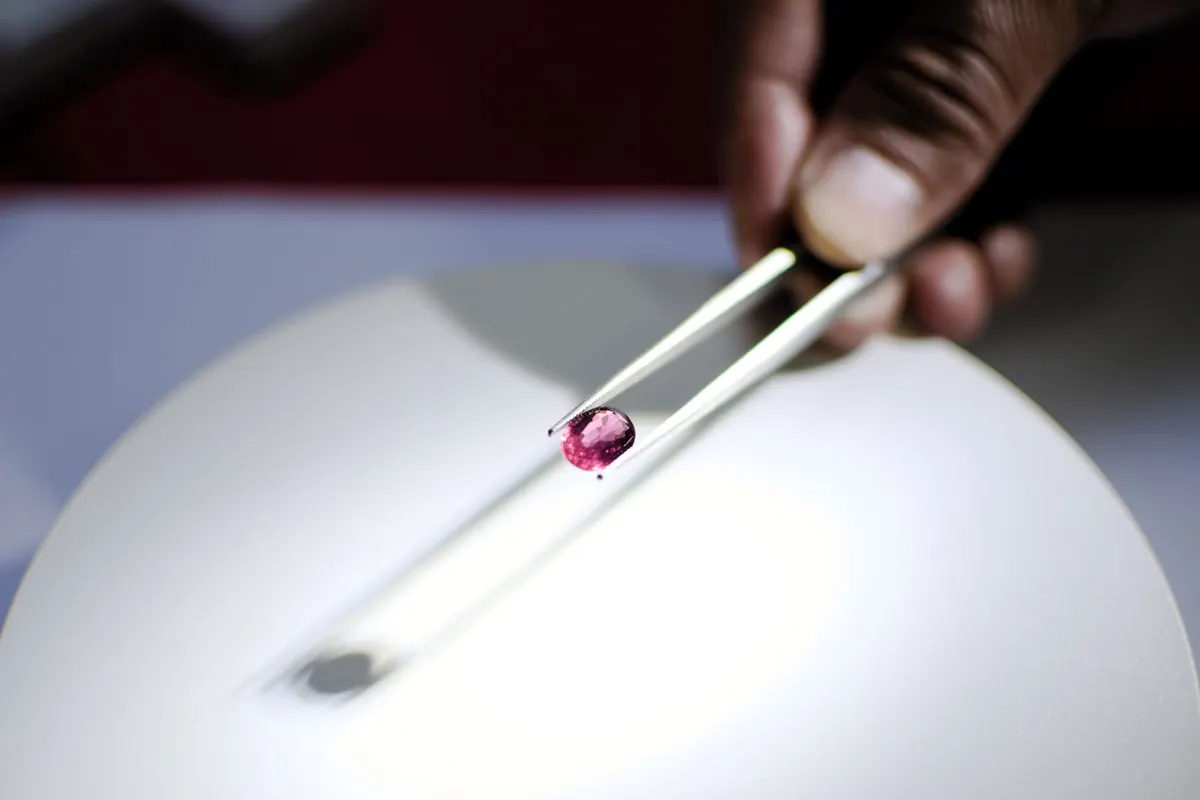
A sapphire shrugs off two weeks of beach sun. An opal can craze after a few days of dry heat. Summer jewellery comes down to knowing which stone is on your finger and where you're taking it. Here's a working checklist: which gemstones tolerate sun, salt and chlorine, which should come off before you swim, and how to pack and care for the pieces you love most.
Heat and light are only part of it. Between June and September a ring meets ultraviolet light, sudden temperature swings, chlorinated water, salt, sweat, sunscreen, sand and the inside of a parked car. Each one attacks differently.
Ultraviolet light bleaches some stones over months of regular exposure. Heat and rapid cooling cause thermal shock, which is why a stone that has been sitting on a hot terrace shouldn't go straight into cold sea water. Chlorine is hard on metals and on porous stones. Salt leaves crystals that abrade settings, and sunscreen works its way into pavé and behind pearls and stays there. Sand is abrasive enough to dull a polished surface over a season.
A day at the beach is really a series of small tests. A ring worn while applying sunscreen collects lotion under the setting. A pendant worn into the sea holds a film of salt against the metal until the next rinse. A bracelet left on a towel in full sun heats up faster than you'd expect, then cools sharply when you pick it up with wet hands. None of these events is dramatic on its own. Repeated every weekend for three months, they add up.
One distinction worth keeping in mind: hardness is not toughness. Diamond is the hardest material we wear, and it will still chip if you knock it against a stone counter at the wrong angle. Emerald is softer and far more brittle than sapphire. Neither fact changes in July, but summer gives you more chances to test them.
Diamond, sapphire, ruby, spinel and the quartz family — clear, smoky and citrine — are the stones I'd happily wear from breakfast to a late swim. They hold their colour in sunlight, tolerate heat, and don't mind being rinsed. Garnets such as almandine, pyrope and rhodolite are close behind: hard enough for daily wear and stable in UV.
In practice, that means a sapphire engagement ring can stay on for a beach holiday, a pair of diamond studs can survive a humid city break, and a ruby pendant is unlikely to object to a sunny lunch outdoors. A quartz watch face or a citrine ring is similarly low-maintenance, provided you rinse off salt and sunscreen at the end of the day.
None of these is indestructible. What makes them summer-friendly is that their weaknesses are mechanical rather than chemical. They chip; they don't fade or dissolve. Check the prongs before the season starts, and again if you've been swimming a lot in cold water, which can shrink fingers enough that a ring turns on the hand.
Tourmaline, aquamarine, blue topaz and zircon are all reasonable summer stones, but treat them as heat-sensitive at the edges. Don't leave them in a hot car, don't wear them into a sauna, and don't plunge a sun-warmed ring into ice water. Some pink and red tourmalines have a reputation for fading with prolonged sun and heat, so rotate them rather than wearing the same piece every day for three months.
Aquamarine is a good example of a stone that looks made for summer but still deserves a little discipline. It is hard enough for regular wear, yet it can be brittle and is prone to chipping at the girdle if it takes a sharp knock. Blue topaz is tougher in everyday use but dislikes sudden heat. Zircon is beautiful and bright, but it is not the same as cubic zirconia and should be treated more gently than a sapphire.
A few gemstones simply don't belong at the pool. They aren't fragile the way a wine glass is fragile — most will survive everyday indoor wear for decades — but summer is their least favourite season.
If your summer wardrobe is mostly these stones, don't despair. The rule is simply: jewellery on last, off first, and never in the sea. A pearl necklace worn to dinner is perfectly happy; the same necklace worn through a morning of swimming and sunscreen is asking for trouble.
Platinum and 18k gold are effectively inert in salt water and chlorine. Sterling silver is not. Humidity, salt and sulphur compounds speed up tarnish, and chlorine can leave it dull and pitted over time. White gold depends on rhodium plating, which wears thinner with abrasion and chemical exposure and will eventually need refreshing.
Plated and vermeil pieces are the ones to leave at home. A thin gold layer over brass or silver rubs away quickly in salt water and sunscreen, and once it's gone the base metal shows. Elastic bracelets and leather cords also age fast in chlorine and sun — replace them before they fail rather than after.
Two more things to check before you pack: glued settings, where heat softens the adhesive, and any ring with a high profile that catches on beach bags and towels. If a stone feels loose — a slight click when you press it — stop wearing the piece until a jeweller tightens the setting.
The easiest way to protect summer jewellery is to build a routine around it. It takes less than a minute and removes most of the risk.
A small travel pouch does more for your jewellery than any expensive cleaner. Pack pieces individually in soft cloths or small zip bags, and keep chains fastened or laid flat so they don't knot. If you're travelling with a few favourites, a hard-sided case is worth the space; a soft pouch offers little protection against a dropped suitcase or a heavy bottle of sunscreen.
At home, wash hard, non-porous stones with lukewarm water and a drop of mild soap, then dry thoroughly. Skip the ultrasonic cleaner for emerald, opal, pearl, turquoise and any stone that has been treated or filled. And if a piece has sentimental value, have it checked by a jeweller at the start of the season rather than waiting for a prong to fail on the sand.
The short version: wear the tough stones, baby the porous ones, rinse everything after salt or chlorine, and leave the irreplaceable pieces at home when the day involves sunscreen and surf. Summer is hard on jewellery, but a little planning means your favourite pieces come back from the beach looking exactly as they should.
Photo: NataliSamorod / Pixabay