An emerald can look magnificent on a phone screen and arrive looking like pale green sea glass. The gap between a photograph and the stone in your hand is wider for emeralds than for almost any other gem, because so much of their appeal depends on light, background and the angle you happen to catch. None of that means you should only buy in person. It means you need to know which questions to ask, and which parts of a listing are quietly doing the persuading.
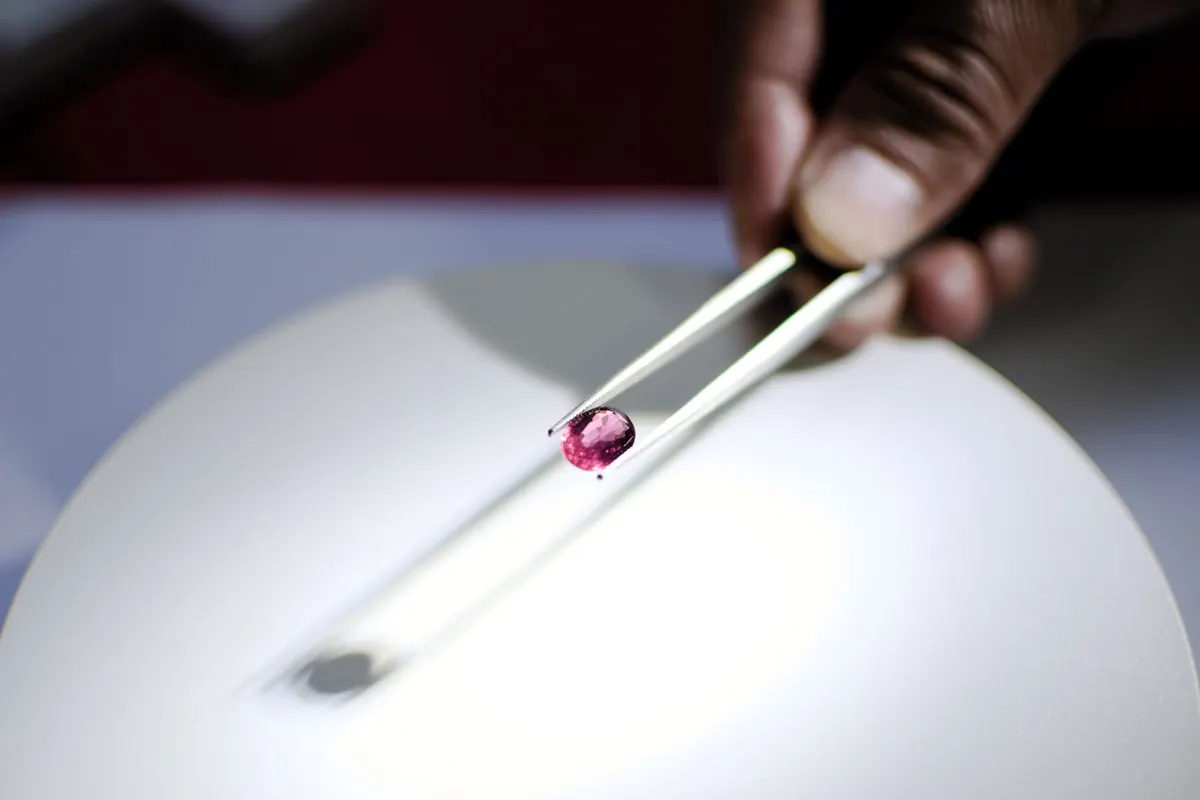
Most gem photography is lit to flatter. A stone shot against a white background with a light behind it will glow, because the light is passing through the stone rather than reflecting off it. Add auto white balance, a saturated phone camera and a little editing, and a medium-green emerald becomes a vivid one.
What you want instead:
Ask the seller to hold a coin or a ruler beside the stone in the video. It sounds fussy. It is also the single fastest way to discover that the "generous" stone in the photo is a 6mm stone, not an 8mm one. And if a seller cannot produce a daylight video at all, treat that as information in itself.
Almost every emerald on the market has been treated in some way, and that is not a scandal. Cedar oil has been used to close surface-reaching fractures for centuries; it improves clarity and is accepted trade practice when disclosed. The problem is the gap between "accepted" and "fully explained".
Traditional oiling with cedar oil is comparatively stable and reversible. Resin or polymer filling, sometimes sold under brand names, is a different proposition: it is used on more heavily fractured material, it can discolour or shrink with age and heat, and it usually signals a lower-quality rough. A listing that says "natural emerald" while leaving you to guess which of these applies is not telling you enough.
Ask directly, and ask for the answer on the invoice: has this stone been oiled, resin-filled or dyed, and was the treatment minor, moderate or significant? Labs use their own terminology, but the general idea is that the heavier the filler, the lower the value and the more careful you need to be. Reputable labs will state the level on the report.
One practical consequence: emeralds with filled fractures dislike ultrasonic cleaners, steam and sudden heat. Tell your jeweller before any resizing or repair, and clean the stone with lukewarm water and a soft brush. If you are unsure about a particular stone, ask a qualified gemmologist rather than guessing.
Emeralds are a type III gemstone, which is the trade's way of saying that visible inclusions are normal and expected. A flawless emerald is not a bargain; it is either extraordinarily rare or not an emerald. Yet online listings borrow diamond vocabulary, and "VS clarity" or "eye clean" gets applied loosely.
Two things are worth pinning down. First, the type of inclusion. Internal "jardin" growth features are characteristic and mostly a matter of taste. Fractures that reach the surface are a durability question, because they can chip or take up dye and filler. Second, the position: a small feather under the table is far more visible than the same feature tucked near the girdle.
Ask the seller what they mean by eye clean, at what distance, and under what lighting. A stone that is clean at arm's length in soft light may be visibly included at 10cm under a lamp. Neither answer is wrong, but you should know which one you are buying.
A lab report is not a report card. Many emerald reports identify the species, confirm whether the stone is natural or synthetic, state the treatment and sometimes offer an origin opinion. They do not hand out a single score that tells you whether the stone is beautiful or good value, and colour descriptions vary between labs.
Check the paperwork properly. Take the report number and look it up on the laboratory's own website rather than trusting the PDF attached to the listing. Confirm the weight and the millimetre measurements match the stone being sold. And be sceptical of a "certificate of authenticity" from a laboratory you have never heard of: it is a marketing document, not independent verification. If you are spending serious money, an independent appraisal after delivery is worth the fee, and a specialist insurer can advise on cover.
Emerald rough is expensive, so cutters often leave a deep pavilion to keep weight. The result is that two 1-carat emeralds can look completely different in size, and you cannot see depth in a face-up photo at all.
"Colombian" adds a premium, and origin is an expert opinion rather than a fact printed on an invoice. Only a handful of well-regarded laboratories issue origin opinions, and even they describe them as opinions. A seller's claim is a claim.
The other quiet risk is material that is not natural emerald at all. Lab-grown emeralds are real emeralds in a chemical sense and can be lovely, but they should be labelled as grown, created or synthetic, and priced accordingly. Composite stones, dyed beryl, and green stones of entirely different species also turn up under the word "emerald" in casual listings. If the colour is superb and the price is a fraction of what that colour normally asks, the reason is usually in the small print. Ask for species confirmation in writing.
Buy the stone, not the story. A careful seller will not be irritated by these questions; they will answer them quickly, in writing, and probably send you a better video than the one you asked for.
Photo: Engin_Akyurt / Pixabay