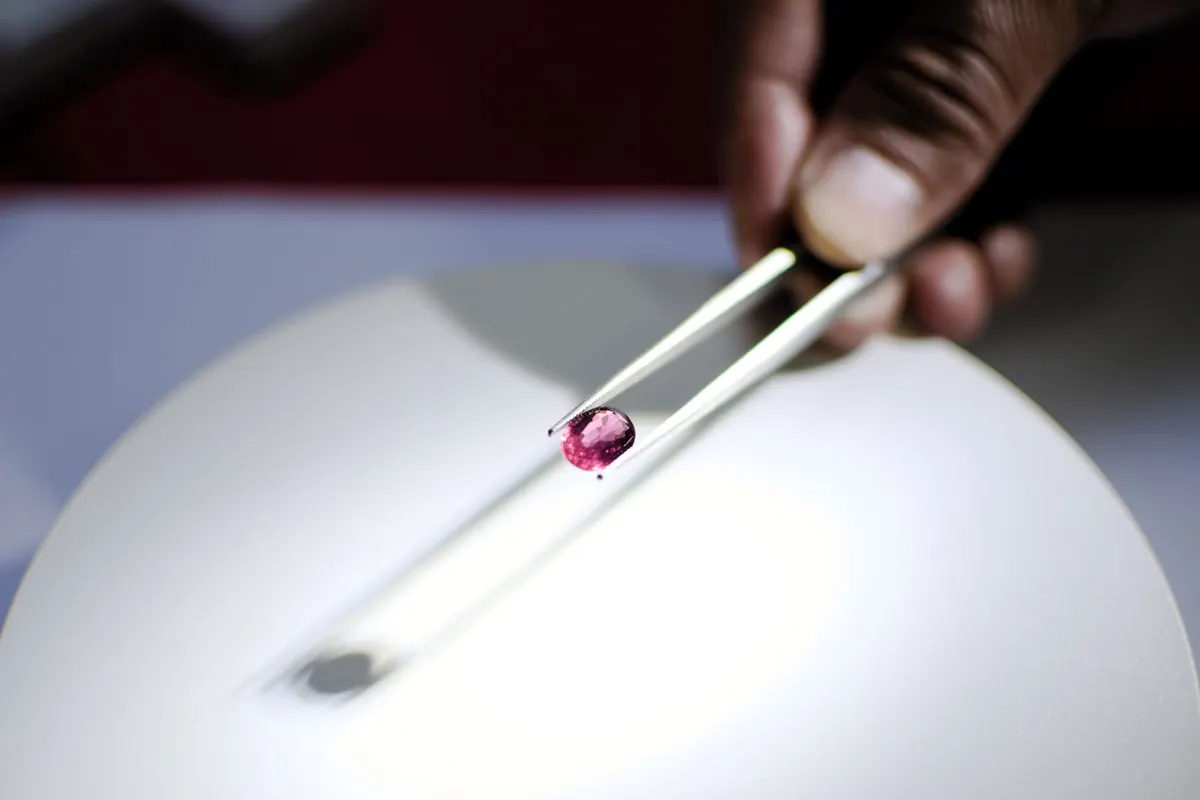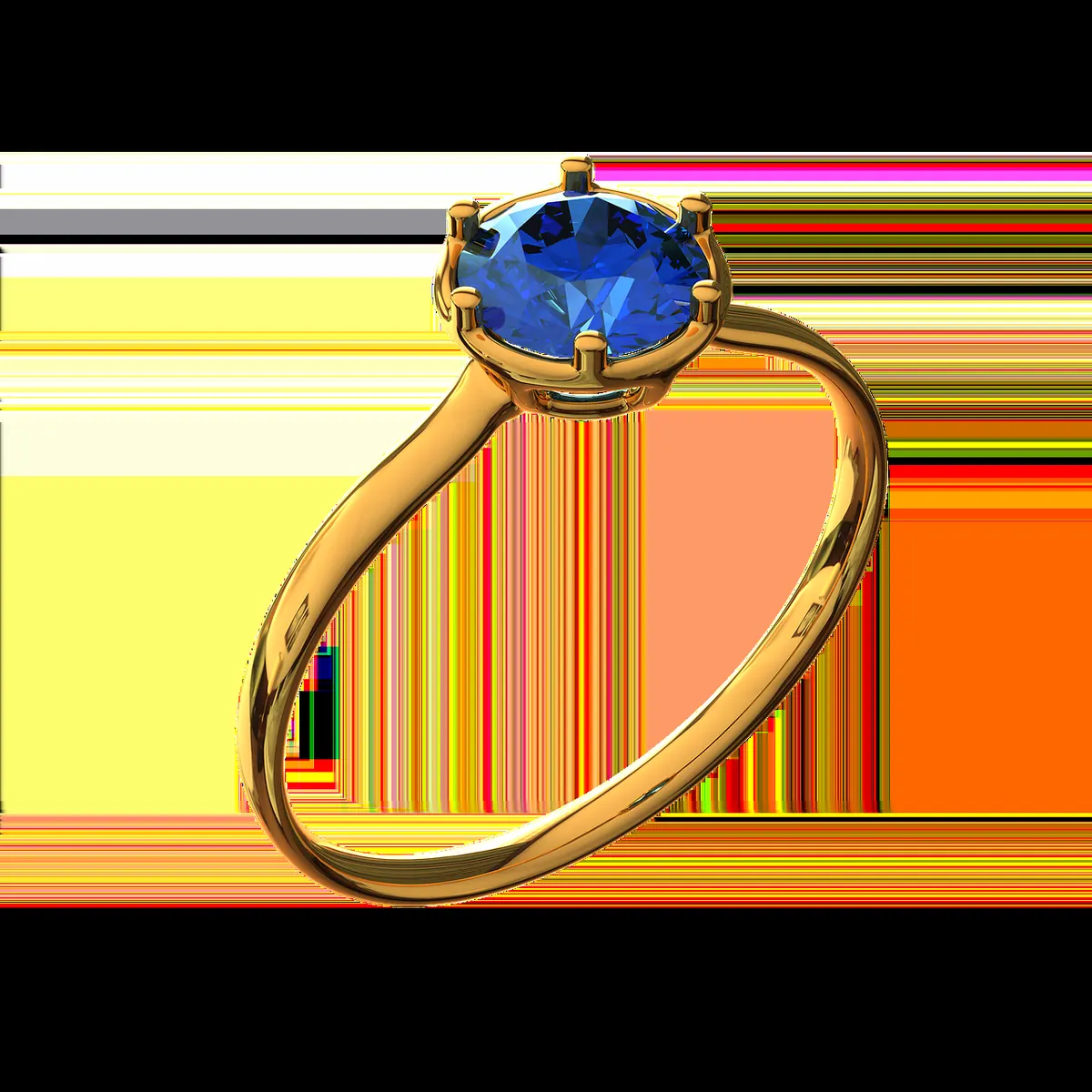
A sapphire ring worn every day — to work, to the sink, to the garden — has a different job from a stone that lives in a box and comes out for anniversaries. That everyday job is where the natural-versus-laboratory-grown question gets interesting. Both are corundum, both score 9 on the Mohs scale, and both will outlast most of what you own if the setting holds. The differences that matter sit elsewhere: in what the stone can hide, what it costs, how it is described on paper, and how forgiving it is when you catch your hand on a doorframe for the thousandth time.
Sapphire is aluminium oxide with a little colouring element mixed in — iron and titanium for blue, chromium for red. That recipe does not change with origin. What changes is the conditions under which the crystal grows, and those conditions leave fingerprints.
Natural sapphire crystallises deep underground over geological time, in an environment that is anything but tidy. Trace elements arrive unevenly, so colour often bands in zones and patches. Tiny rutile needles — silk — can scatter light across a stone. Crystals of other minerals get trapped. Fractures heal, or don't. A fine natural sapphire is beautiful partly because it carries that history, and a cutter's job is to work around it. Many natural sapphires are also heat treated to improve colour and clarity; heating is routine and permanent, and unheated stones usually carry a premium.
Laboratory-grown sapphire is the same material grown on purpose. Flame fusion melts powdered feedstock and drips it onto a growing crystal; flux growth dissolves the ingredients in a molten solvent and lets crystals form slowly, often over weeks; hydrothermal methods grow crystals in a pressurised solution. Chemically and structurally, the result is corundum. Visually, it is often cleaner than all but the finest natural stones, because nobody had to grow around a crack.
Terminology shifts depending on who is speaking. Gem laboratories tend to call this material synthetic corundum. The trade says laboratory-grown, created or lab-created. All describe the same thing, and none of them should ever be left off a sales description.
Neither stone has cleavage. Neither splits along a flat plane. When a sapphire breaks, it fractures in a curved, shell-like way, usually starting at the girdle edge or under a prong. The practical difference is how many places a break has to start.
A natural stone with a surface-reaching inclusion, a feather near the rim or a filled cavity gives impact somewhere to work. A very clean laboratory-grown stone has fewer of those starting points. But a thin girdle is a thin girdle whichever way the material was made, and a badly cut pavilion will chip in either case. Cut quality and setting design matter more than origin here.
One habit worth forming: have the prongs checked once a year. A loose prong, not a flaw in the crystal, is what loses most stones.
Laboratory-grown sapphire costs a fraction of comparable natural material, and the gap widens as stones get larger. That is why lab-grown stones appear so often in generous sizes — a five- or six-carat blue is a realistic purchase rather than a fantasy. Natural sapphire pricing is driven by colour first, then clarity, size and cut; origin and unheated status can add a premium in the upper market.
Resale is the honest part of the conversation. A laboratory-grown stone has almost no second-hand market as a gem. A fine natural sapphire can be resold, though usually well below what a retailer charged. If you are buying an engagement ring and expect to keep it for forty years, buy the stone you want to look at; if you are buying partly as a store of value, laboratory-grown material is not that.
One cost that never changes is the setting. Bench time, gold or platinum, and the jeweller's skill cost the same whether the stone cost two hundred pounds or twenty thousand. Put money into the setting and into a careful cut — a well-cut lab-grown sapphire in a solid bezel is a better everyday ring than an indifferent natural stone in spindly claws.
In most markets, a stone described simply as "sapphire" should be natural, and laboratory-grown material must be disclosed at the point of sale. Wording varies — lab-grown, created, laboratory-created, synthetic — and national rules differ, so ask for the description in writing on the invoice rather than relying on a label in a display case.
For anything beyond a modest purchase, ask for an independent gemological report or at least a written statement of identity and treatment. Neither material can be separated reliably by eye in a shop; identification needs a laboratory and instruments. If a seller cannot say plainly what the stone is and whether it has been treated, that is your answer.
Where money or insurance is involved, it is sensible to confirm valuation and coverage with the insurer or a qualified appraiser rather than working from general guidance.
Think about the hand, not the photograph. A nurse who wears gloves all day, a gardener, a potter, someone who types for a living — each has a different risk profile, and all of them are better served by a low, protected setting than by a tall one.
Clean either material the same way: warm water, a drop of mild soap, a soft brush, then a rinse and a dry with a lint-free cloth. Skip ultrasonic cleaners if the stone has any filling or the setting is antique. A sapphire is one of the few stones that genuinely suits a life on the hand — pick a sound one, put it in a sensible setting, and it will keep doing its job long after the trend that sold it has been forgotten.
Photo: Agzam / Pixabay